

.svg)
In Myanmar, many businesses believe that marketing success comes from reaching more people. They focus on increasing impressions, posting more content, and running more advertisements. But despite all these efforts, many marketing campaigns still fail to generate meaningful results.
The problem is not always the product, the platform or even the budget.
The real problem is that most marketing ignores human psychology.
Marketing is not just about information. It is about influence. Every purchase decision is driven by emotions, perceptions, and psychological triggers that happen inside the human mind.
If marketers fail to understand how people think and make decisions, even the most creative campaign can fail.
This is why persuasion is one of the most powerful skills in marketing.
Understanding persuasion allows marketers to move beyond simply attracting attention and start influencing behavior.
The Biggest Misconception in Marketing
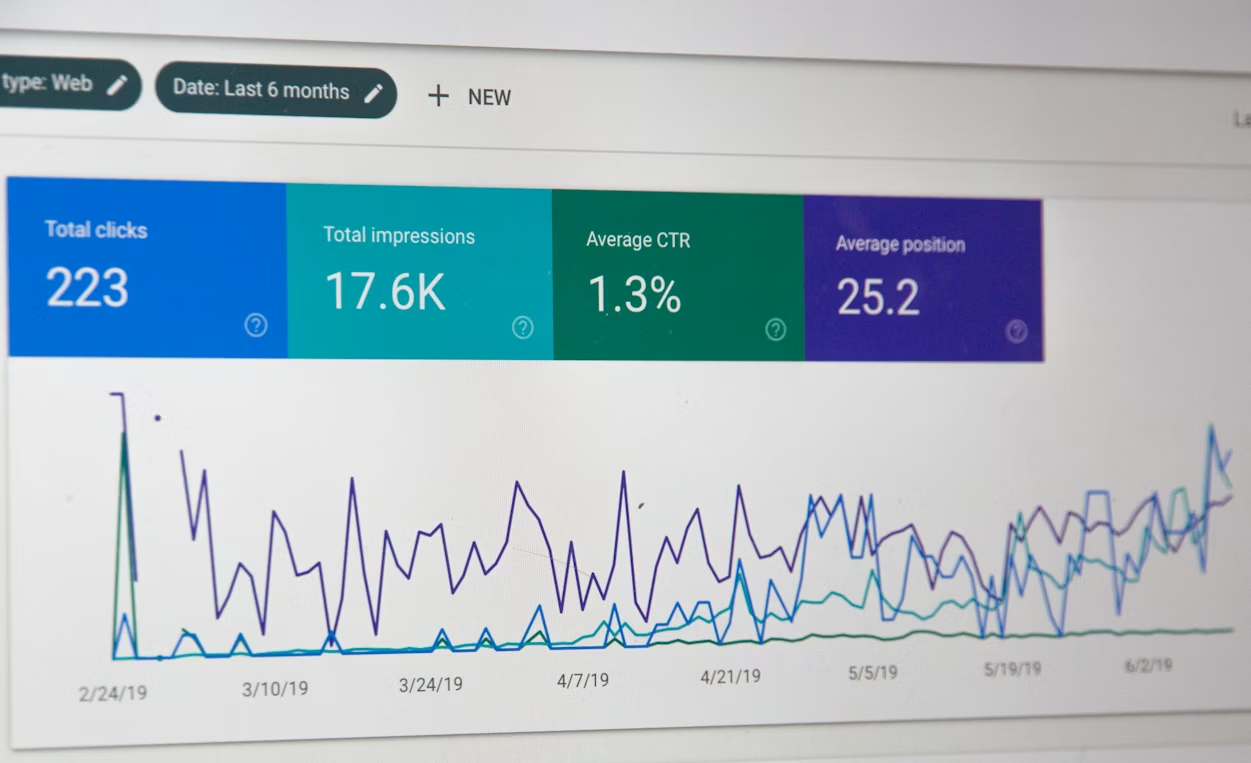
One of the biggest misconceptions in marketing is the belief that attention equals success.
In Myanmar, many marketers celebrate metrics such as views, likes, and shares. While these numbers can indicate visibility, they do not necessarily lead to sales.
Attention alone does not create action.
A post may receive thousands of likes, but if it does not persuade the audience to take the next step, it does not create real business impact.
Persuasive marketing focuses on a different question:
“What makes people act?”
Instead of only trying to capture attention, persuasive marketers design messages that guide people toward a decision.
This shift in thinking separates ordinary marketing from effective marketing.
The Psychology Behind Every Purchase
Every buying decision is influenced by psychological factors.
People rarely make purely logical decisions. In reality, emotions play a much larger role in shaping behavior.
For example, Burmese people buy products because they want to:
- Feel successful
- Avoid missing out
- Belong to a group
- Solve a problem quickly
- Reduce uncertainty
A persuasive marketer understands these motivations and communicates in a way that connects with them.
Instead of simply listing product features, persuasive marketing highlights the emotional and psychological value behind the product.
For example, a phone is not just a device with specifications.
It represents convenience, status, productivity, and connection.
When marketers understand this difference, their communication becomes far more powerful.
The Power of Persuasion Principles
There are several persuasion principles that successful marketers consistently use.
One of the most well-known persuasion frameworks comes from the work of Robert Cialdini, who identified key psychological triggers that influence human decisions.
These principles appear repeatedly in successful marketing campaigns.
Social Proof
People tend to follow the behavior of others, especially when they are uncertain.
This is why reviews, testimonials, and customer numbers are powerful marketing tools.
When potential buyers see that many others have already chosen a product, their perceived risk decreases.
Social proof creates trust.
Scarcity
Scarcity increases perceived value.
When something is limited, people feel a stronger urge to act quickly.
Limited-time offers, countdown timers, and low-stock notifications are examples of scarcity in action.
Scarcity works because humans naturally fear missing out on opportunities.
Authority
People are more likely to trust information that comes from a credible or knowledgeable source.
Brands often use experts, professionals, or industry leaders to strengthen their authority.
Authority reduces doubt and increases confidence in the decision-making process.
Consistency
Once people commit to something small, they are more likely to continue with larger commitments later.
For example, if someone signs up for a newsletter, they become more open to future offers.
This principle is often used in marketing funnels where small actions gradually lead to bigger decisions.
Why Persuasion Is the Future of Marketing
As digital platforms become more crowded, attention becomes harder to capture.
Consumers see thousands of marketing messages every day.
Because of this, simply creating more content is no longer enough.
The marketers who succeed in the future will not necessarily be the ones who produce the most content.
They will be the ones who understand human behavior better than everyone else.
Persuasion is what transforms marketing from noise into influence.
Instead of competing only for visibility, persuasive marketers compete for understanding.
They study what people care about, what they fear, and what motivates them to take action.
This deeper understanding allows them to craft messages that resonate with the audience on a psychological level.
What Businesses Must Learn
Businesses that want to improve their marketing results must shift their mindset.
Marketing should not begin with the product.
It should begin with the customer.
Understanding the customer’s thoughts, emotions, and motivations is the foundation of persuasive marketing.
Businesses should ask questions such as:
- What problem does the customer truly want to solve?
- What fear or frustration do they want to avoid?
- What outcome do they desire the most?
When marketing messages directly address these questions, persuasion becomes natural.
Instead of pushing products, businesses guide customers toward solutions.
TL;DR
Most marketing fails because it focuses on attention instead of persuasion. People don’t buy based on information alone — their decisions are driven by emotions and psychological triggers. Successful marketing works by understanding human behavior and using persuasion principles like social proof, scarcity, and authority to influence action.